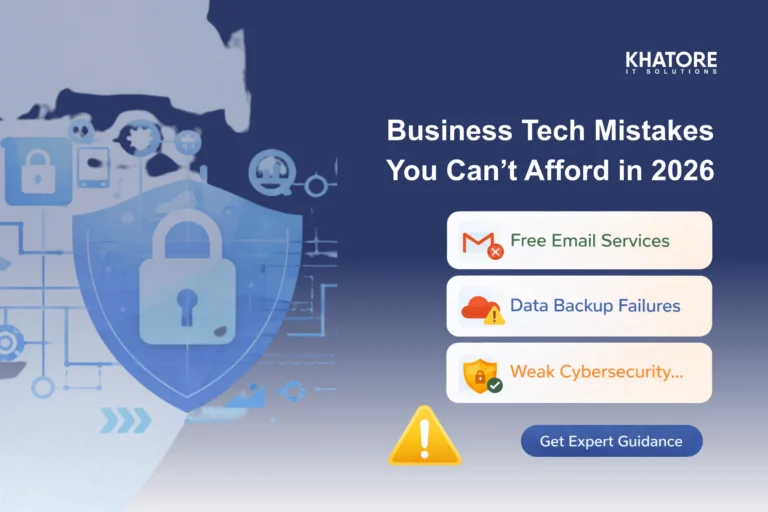
In 2026, technology is the backbone of how companies operate, grow, and serve customers.
For small and mid-sized businesses in India, the digital playing field is expanding rapidly, and expectations are higher than ever. Yet, despite widespread adoption of digital tools, many businesses continue to make basic but costly mistakes in their tech strategy.
These are not minor technical oversights. They lead to missed opportunities, data breaches, poor customer experiences, and real revenue loss.
Here’s a comprehensive look at the top business tech mistakes you can’t afford to make in 2026 — and how to avoid them.
1. Relying on Free Email Services for Business Communication
Still using a Gmail or Yahoo email ID for business? While it may seem cost-effective, it hurts your credibility.
In 2026, a professional domain-based email is essential for trust and branding.
Why it matters:
Customers perceive free email IDs as unprofessional
Higher chances of emails landing in spam
No central admin control or compliance
The solution:
Adopt professional email platforms like Microsoft 365 or Google Workspace. These offer not just email, but also calendars, cloud storage, collaboration tools, and compliance features.
2. Skipping Regular Data Backups
Data is one of your most valuable assets, yet many businesses either don’t back up regularly or rely on outdated manual methods.
Risks include:
Ransomware wiping out critical data
Accidental deletions
Hardware failures
Modern fix:
Implement automated, encrypted cloud backups using services like OneDrive for Business, Google Drive, or AWS S3. Just as important, test your data restores regularly.
3. Ignoring Cybersecurity Basics
Cyberattacks on Indian SMEs continue to rise, and in 2026, attackers are more sophisticated than ever. A single phishing email or weak password can still compromise an entire operation.
Critical mistakes include:
No multi-factor authentication (MFA)
Weak or reused passwords
Unprotected devices
What to do instead:
Enforce MFA for all users
Use business-grade antivirus and endpoint protection
Educate employees on phishing awareness
Enable device encryption and remote wipe
Solutions like Microsoft Defender, Bitdefender, or ESET remain reliable options for SMEs.
4. No Centralized IT Management
Many growing teams still operate without centralized control over devices, software updates, or user permissions. This creates both security risks and operational inefficiencies.
Why this fails:
Inconsistent software versions
Unauthorized app installations
No visibility into device or user activity
Best approach:
Use centralized management tools like Microsoft Intune or Google Endpoint Management to manage company devices, enforce policies, and streamline IT support.
5. Delaying Website Modernization
Your website is often the first interaction a customer has with your business. In 2026, an outdated or slow website directly impacts trust and conversions.
Common signs you need a website upgrade:
Takes more than 3 seconds to load
Not optimized for mobile devices
No SSL (https://)
Poor UI/UX
What to do:
Invest in a professionally designed website with:
Responsive design
SEO optimization
Fast and secure hosting
Clear calls to action
Companies like KITSPL offer web design packages tailored for Indian SMEs.
6. Using Consumer Tools for Team Collaboration
WhatsApp groups and shared Google Docs are no longer sufficient for modern teams in 2026.
Risks of consumer tools:
Data leakage
No version control
Limited workflow integration
Upgrade to:
Microsoft Teams or Google Chat for messaging
SharePoint or Google Drive for file sharing
Project management tools like Planner, Trello, or Asana
7. No Disaster Recovery Plan
Unexpected events such as cyberattacks, power failures, or natural disasters can halt operations instantly. In 2026, businesses without a recovery plan face serious downtime costs.
Common mistakes:
No clarity on how to restore systems
No backup of critical applications
No emergency IT support plan
Fix it by:
Creating a simple business continuity plan
Backing up key systems and documents
Partnering with IT providers that offer 24/7 support
8. Overlooking Licensing and Compliance
Using unlicensed software or ignoring data protection laws in 2026 can result in legal penalties, audits, and reputational damage.
Watch out for:
Pirated or unlicensed software
Lack of GDPR or DPDP compliance
No email archiving or audit trails
Do this instead:
reminded Ensure all software is properly licensed
Understand and follow applicable data regulations
Use tools like Microsoft 365 Compliance Center or Google Vault
9. Failing to Train Employees on New Tools
Investing in new software is ineffective if your team doesn’t know how to use it properly.
Signs of low adoption:
Teams reverting to old methods
Underused applications
Increased support requests
Solution:
Conduct onboarding and regular training sessions
Appoint internal power users or champions
Focus on how tools solve real business problems, not just features
10. Choosing the Cheapest IT Support Option
Low-cost IT support may appear attractive, but in 2026 it often leads to higher long-term costs.
Cheap IT usually means:
Slow response times
Inconsistent service quality
No long-term strategy
Smart IT support offers:
Proactive monitoring
Faster issue resolution
Scalable solutions aligned with business growth
Working with a reliable partner like KITSPL ensures you get more than just support — you get a technology roadmap.
Final Thoughts
In 2026, technology mistakes are not small errors. They are business risks.
Whether you’re launching, stabilizing, or scaling your business, avoiding these common pitfalls can make the difference between sustained growth and stagnation.
The good news is that most of these issues are easy to fix with the right awareness and the right partners.
Start by auditing your current setup. Identify gaps, address vulnerabilities, and work with experienced IT professionals who understand the needs of Indian SMEs.
Looking to avoid these mistakes?
Get in touch with the experts at KITSPL and build a smarter, safer, and more scalable tech foundation for 2026 and beyond.