
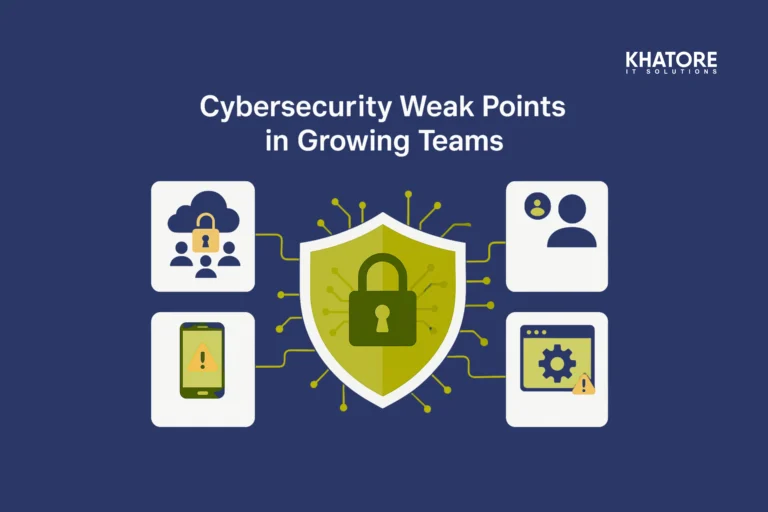
As businesses in India scale, the rush to expand operations, onboard new people, and adopt cloud tools often moves faster than the security needed to protect them. For many growing teams whether they’re opening new locations, hiring remotely, or working across multiple platforms cybersecurity ends up becoming reactive instead of proactive.
The danger sits quietly in the background: small weaknesses that go unnoticed until they suddenly turn into a breach or data loss.
This blog walks you through the five most overlooked cybersecurity weak points in growing teams and what Indian businesses can do to safeguard themselves in 2025 and beyond.
1. Unsecured Collaboration Tools
Cloud platforms like Microsoft 365 and Google Workspace make teamwork simple, but they also open up vulnerabilities when they’re not configured correctly.
Common Issues:
Files shared with “Anyone with the link”
Guest access in Teams or shared drives not monitored
No expiration on shared content
Weak access controls across departments
What to Do:
Use audit logs to track sharing activities
Educate users on secure sharing practices
Use DLP (Data Loss Prevention) tools built into your cloud suite
2. Employee Onboarding & Offboarding Gaps
As teams grow, HR and IT processes often fall out of sync. New employees may receive broader access than necessary, while former staff sometimes retain access far longer than they should.
Risks:
Former staff still able to access email, files, CRM
Unused accounts becoming easy entry points for attackers
Generic logins shared among teams
Solutions:
Integrate HR and IT workflows using Microsoft Entra or Google Admin
Automate account provisioning and de-provisioning
Regularly review and revoke inactive accounts
3. Weak Mobile Device Security
Hybrid work and BYOD policies mean mobile phones and tablets now function as work devices. Yet many companies overlook basic mobile security.
Overlooked Risks:
Devices without screen locks or encryption
Lost or stolen devices with no remote wipe
Employees accessing company data through personal apps
How to Fix It:
Use MDM tools like Microsoft Intune or Google Endpoint Management
Enforce essential device hygiene (passcodes, OS updates)
Separate personal and business data using containerization
4. Lack of Cybersecurity Awareness Training
As your team expands, so does the risk of human error. Phishing, social engineering, and credential theft remain the most common causes of corporate breaches.
Signs You Need Training:
Employees reuse passwords or note them down
Unknown emails get clicked without verification
Sensitive data gets shared on unsecured channels
Build Awareness By:
Conducting quarterly cybersecurity training
Running phishing simulations
Creating a security-first culture led from the top
Even the best firewalls can’t stop an uninformed user from opening the wrong file.
5. Outdated or Unpatched Software
Updates may seem inconvenient, but skipping them leaves your systems exposed. Unpatched software is one of the simplest ways attackers gain access.
At Risk:
Unpatched operating systems (especially Windows 10 nearing end of support)
Outdated browsers, plugins, or desktop apps
Legacy internal apps with no update pipeline
Actionable Steps:
Automate software updates across all devices
Schedule regular vulnerability scans
Decommission unsupported tools
Shift to cloud-native platforms where updates happen automatically
Final Thoughts
Cybersecurity is no longer optional especially for growing teams managing sensitive data across devices, apps, and geographies. These overlooked weak points can silently expose your business to serious threats.
The good news is that you don’t need a dedicated internal security department to fix them.
At KITSPL, we help Indian SMEs implement practical, scalable, and cloud-friendly cybersecurity solutions including Microsoft 365 security, endpoint protection, secure onboarding/offboarding, and more.
Book a Free Consultation to assess your team’s current security posture and start implementing best practices tailored to your stage of growth.